


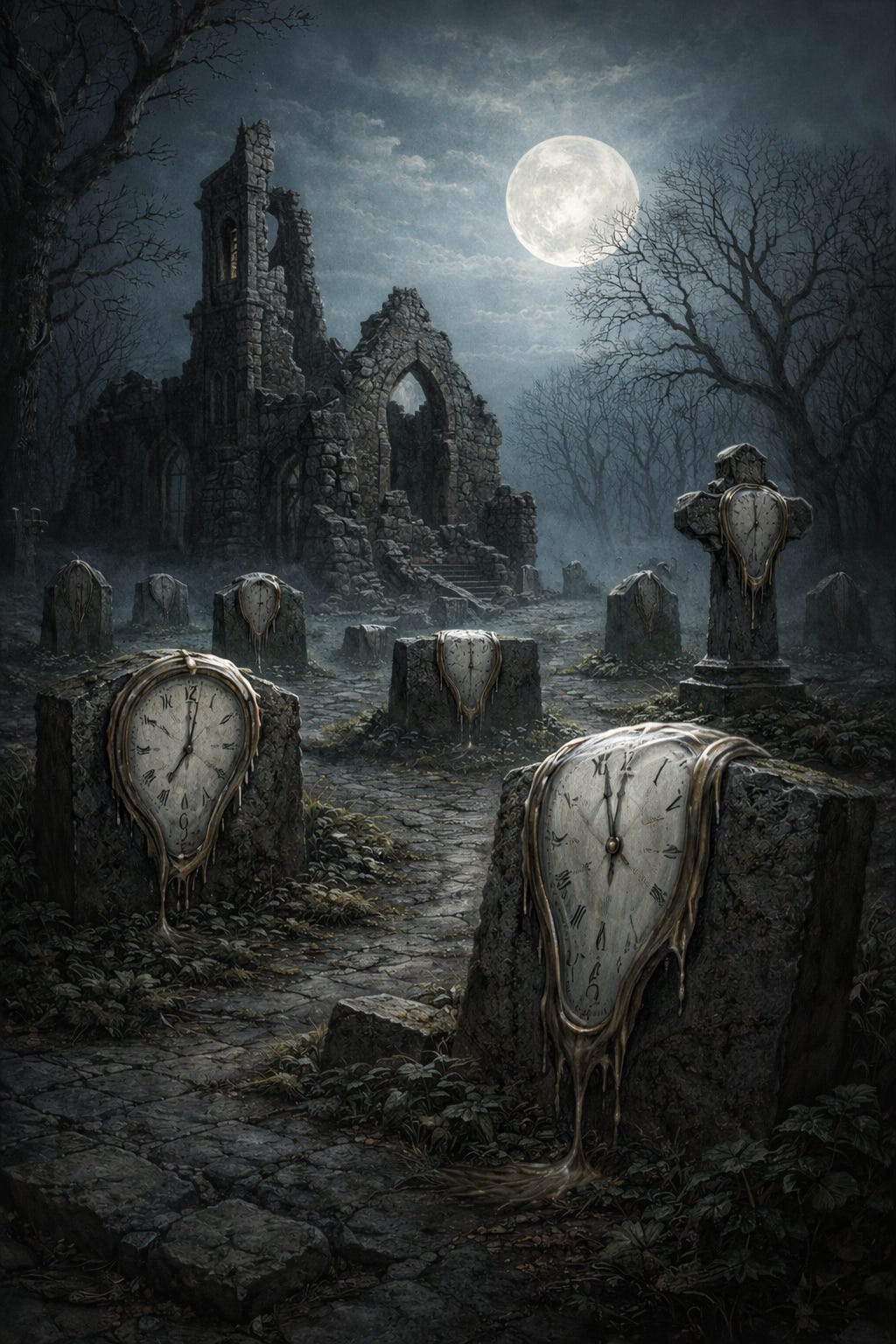
Although it now caused him pain, he’d kept the clock that had saved his life. Often he would go back to that morning in his mind, analyzing every little detail, looking for meaning that just was not there.
Pól had had great difficulty getting up. He could still remember the heaviness of his limbs and the fuzziness of his head. The drinking he had done the night before had left an obvious mark.
He crawled into the bathroom, skipped the shower as it was just too much effort and went into his tiny kitchen for coffee. After the first fuzzy cup and two cigarettes his mind started to slowly turn its inflamed and imbibed cogs.
Through blood shot eyes he looked at the clock. Seven thirty. He still had time for another quick coffee and a cigarette. Pól felt like he was a straw man, and decided he definitely needed the strength that bit of extra caffeine and nicotine would give him. He had time.
He enjoyed his second cup even more than the first, he could savor this one. The first one was about survival, this one was about living.
Finally, feeling more like a functioning human being, Pól stepped out in the cold, Irish rain. The freshness of the morning felt good and it made him that bit better.
The factory Pól worked in was across the small town he lived in, occupying most of a large industrial estate. Pól biked to work, and the cold wind cutting across his face as he pedaled his old Raleigh, helped him sober up.
He was, maybe, five minutes away from the factory gate, when the loudest noise he had heard in his life made him stop short, almost falling off the bike. The noise was followed by a huge flame shooting up to the sky, and then quickly, smoke started to flood the air.
Pól was in shock, and just stood there, pinned into place, just looking at the enormous blaze which was accompanied by loud crackling noises. Soon screams could be heard and Pól snapped out of it. He got on his bike, and rode straight into the industrial park.
Past the gates he could see that a huge fire had taken over a large section of the factory he was going to. Workers were streaming out covered in dust and soot. Some were screaming and some were obviously hurt.
‘It must be what hell looks like...’ Pól could not help the thought from forming in his mind. He got off the bike and started randomly helping people, trying to get them away from the burning building.
It took the firefighters two whole days to fully put out the fire. Many people were hurt and a few lost their lives. Pól was recognized for his help and selfishness of throwing himself right in there to support his fellow factory workers with no regard for his own safety.
Pól was seen as a hero by everybody but himself. When he got home that evening he saw that the kitchen clock was stuck to seven thirty. The battery had run out. His laziness and drunkenness had saved his life, and it was not fair. Worthy people had lost their lives in that fire, he should have been in their place. Pól sunk into a black pit of depression.
Pól stopped going into town because he could not stand seeing the admiring eyes of the people. He could not answer their niceties. Didn’t they know that he should have been there? That he had cheated death and now he was unworthy of living.
One night, it must have been a good five months after the fire, when Pól could not find any relief in sleep, he put his coat on and went walking about in the cold night, under a beautifully lit sky.
Pól walked and walked on the deserted streets until he got to a small graveyard. He knew the graveyard well, it was so old that most likely there were no more bones under the weather beaten stone crosses. The graveyard used to belong to the old parish church built in the 16th century, now itself just a bunch of ruins.
That was how Pól felt, like the ruin of a human being, and, somehow, his own perceived decrepitude, made him feel connected to the old, crumbling church.
Pól sat on a worn out stone and listened to the wind, looked at the light of the moon falling on the abandoned church, felt the air sweeping over him and for the first time in a long time he felt able to breathe properly. Tears started streaming down his cheeks, and soon, they were accompanied by loud sobs and muttered words.
‘I am not worthy, I should have been there instead of them …’
Pól’s words and sobs were carried away, and his tears dried by the wind. He did not know how long he had sat there, but with the rising of the sun Pól found that his spirits were lifting also. A small, shy voice whispered inside of him:
‘It was just not your time …’, and Pól understood that there was no meaning to be had, it was just that simple.
In the coming days Pól thought a lot about his own time, the one that he had, that he was in, and he felt overwhelmingly lucky. Pól thought a lot about his life and the things he used to enjoy before life’s drudgery had taken over and he had forgotten what joy was.
Pól was determined to make the drudgery bearable, if not even enjoyable. He did not have it in him to become a life coach, or an influencer, or a mindfulness instructor. Pól had to work for his living and that is where his change started.
Pól decided he would be really good at his job so it did not stress him out. Then he decided he would focus on it when he was in work so he would not think about it when he was off work.
When not working, he tackled boredom by taking his old Raleigh on the road and enjoying the beautiful scenery all around him.
And Pól, he would help anyone who needed it, because Pól felt he needed to repay the world for his life.
What a beautiful story!